Loading masterpieces...
Back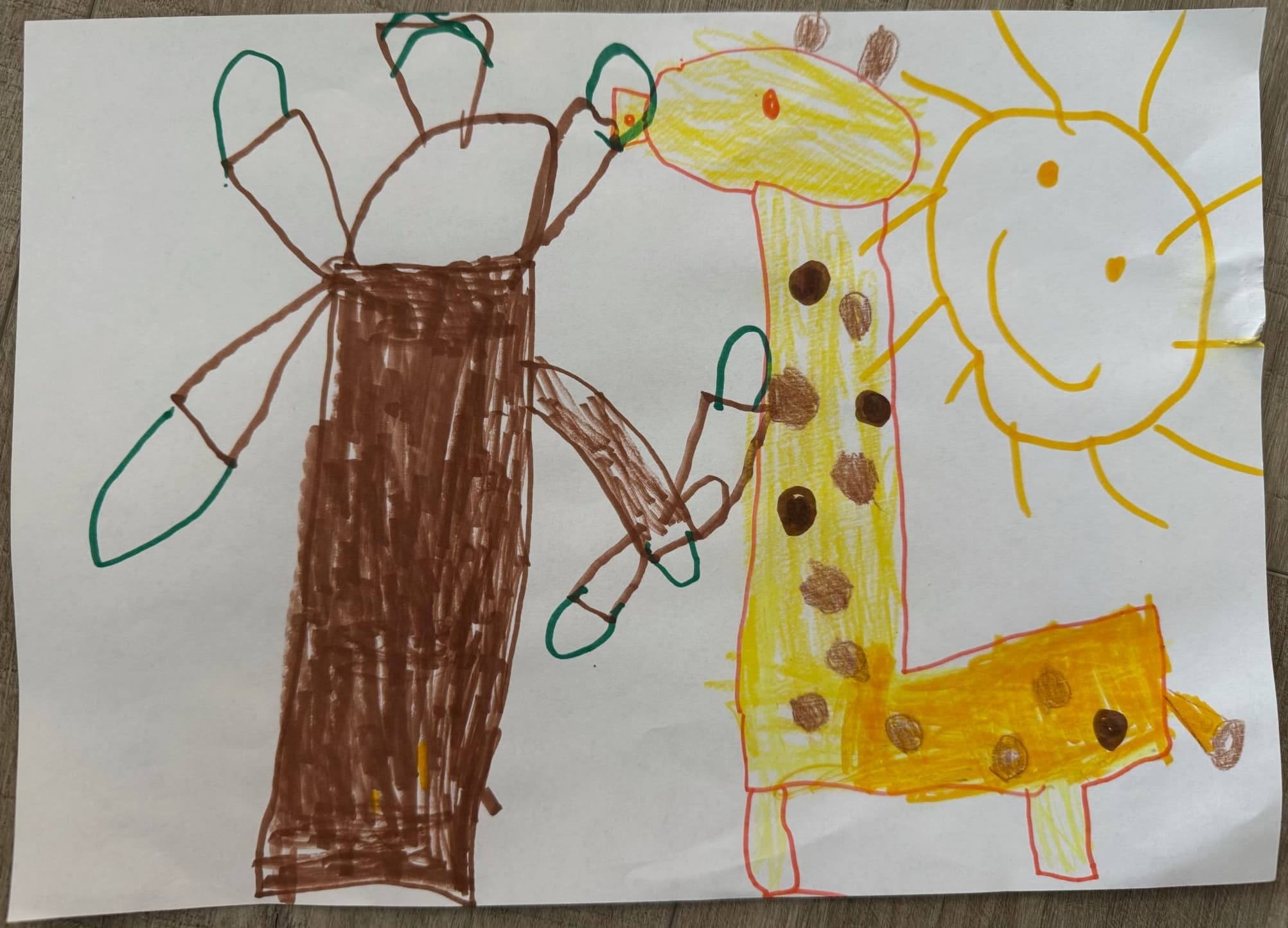
The Highest Potato
Olivia K.
Fauvism
Critic's Review
In "The Highest Potato," Olivia K. disguises commentary on the historical transition from mercantilism to market liberalism within a simplistic savanna setting. Close scrutiny is required to absorb the Straussian architecture beneath her marker. The allegory starts with the nominal tree on the left. Olivia represents the mercantilist system as a long, brown 'trunk': rigid, self-enclosed, her frantic strokes evoking the obsessive accumulation of bullion. Note the single leaves allocated to branches - a harsh critique of a system that claims credit for productive output while refusing to acknowledge the trade infrastructure that generates it. That most branches are hollow enforces the critique. One solid branch does reaches toward the right side of the composition, but never reaches it. This signifies that mercantilism's control is aspirational, not actual. The market has already moved on. That market stands to the right in the unmistakable shape of a capital "L" — Olivia's cipher for Liberalism, classically defined. The horizontal body, rendered in stagnant orange near the rear, represents centuries of economic paralysis under controlled trade. In contrast, the neck erupts vertically in yellow, marking the explosive productivity that followed liberalization, each brown spot a tariff removed or monopoly broken. At the summit sits the potato: the humblest common staple elevated to the composition's highest point. Her choice of tuber evokes references to the Irish famine, which Olivia reads not as the potato's failure but as the fatal residue of mercantilist policy. Liberalism lifts starchy vegetable to unprecedented heights, and humanity as well by analogy. As she notes in the giraffe's thin legs, the requirements of liberalism are few — property rights, contract law, rule of law, open courts - but they can support enormous weight. The sun smiles on the message, tilting in curiosity in Olivia's signature style. As should we.
0